About
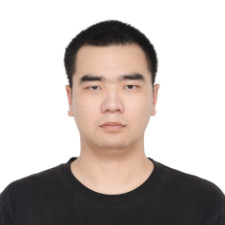
Tianjie Chen
Personal statement will be added shortly! :-)
Personal statement will be added shortly! :-)

Passed the PhD qualifying exam on my birthday with exceptional feedback.

Joined the DREAM Research Center and started working on projects involving zero-knowledge proof systems and trusted execution environments.
Started my computer science PhD journey at NMSU and joined the PRISM research lab.

Obtained a Bachelor of Science in computer science from PSU.

Published my first first-author paper on increasing explainability of cancer prediction models.

Published my very first paper about analyzing dimensionality reduction techniques.
Started my journey in conducting research on AI/ML by developing an integrated solution for cancer diagnosis and prognosis.
Started my academic journey at PSU.
- Kim, J., Chen, T. and Kabir, M.F., 2025. Automated Image Segmentation Using Self-Iterative Training and Self-Supervised Learning with Uncertainty Scores. In Recent Advances in Deep Learning Applications (pp. 3-21). Chapman and Hall/CRC.
- Kim, J., Chen, T., Nguyen, H. and Kabir, M.F., 2024, December. YOLO-SCSA: enhanced YOLOv8 with spatially coordinated shuffling attention mechanisms for skin cancer detection. In 2024 International Conference on Machine Learning and Applications (ICMLA) (pp. 408-415). IEEE.
- Khatriya, N., Chen, T., Kabir, M.F. and Brearly, T., 2024, December. Identifying Probable Neurological Disorders with Explainable Machine Learning Techniques. In 2024 IEEE International Conference on Big Data (BigData) (pp. 5006-5013). IEEE.
- Chen, T. and Kabir, M.F., 2024. Explainable machine learning approach for cancer prediction through binarilization of RNA sequencing data. Plos one, 19(5), p.e0302947.
- Kanjula, K.R., Datla, A.R., Chen, T. and Kabir, M.F., 2023, December. An edge internet of things framework for machine learning-based skin cancer detection models. In 2023 International Conference on Machine Learning and Applications (ICMLA) (pp. 2167-2173). IEEE.
- Kabir, M.F. Chen, T. and Ludwig, S.A., 2023. A performance analysis of dimensionality reduction algorithms in machine learning models for cancer prediction. Healthcare Analytics, 3, p.100125.